Amphibians play an important role in ecosystems as they are able to provide energy and food for organisms in higher trophic levels. Most of these amphibians have multiple life stages where throughout their lifespans they may live in more than one habitat (Stark & Schwarz, 2024). As a result, this helps with nutrient flow between aquatic and land habitats through energy flow.
Trophic level: The levels in a food chain that show how energy moves from plants to consumers
So why is this important?
When amphibian populations decline, nutrient cycling becomes less efficient, which leads to shifts in available food sources and could potentially disrupt the trophic relationships within an ecosystem (Stark & Schwarz, 2024). For example, as Bd directly affects amphibians, organisms such as snakes and macroinvertebrates are affected indirectly as these populations are dependent on amphibians (Figure 1).
Ecosystem: "Community and interactions of living and nonliving things in an area" (National Geographic Society, 2023).
Macroinvertebrate: These are organisms that lack a backbone, but are large enough where they are visible to the naked eye (Figure 1).
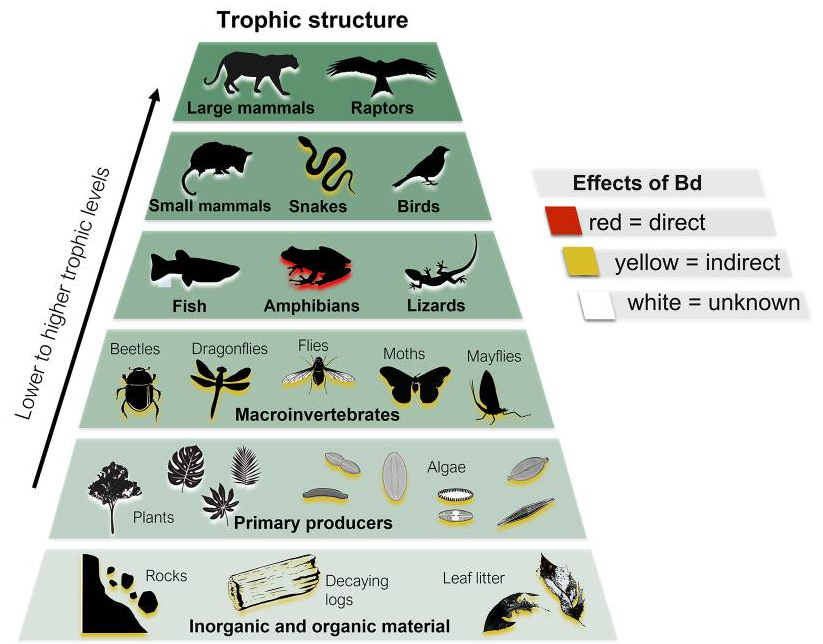
Figure 1. General trophic structure of an ecosystem consisting amphibians
Source: https://pmc.ncbi.nlm.nih.gov/articles/PMC9302726/
Keystone Species and Biodiversity
Amphibians serve as keystone species, where they are able to control algal populations, which help reduce sediment accumulation in waters.
Keystone species: Keystone species are organisms that help hold the ecosystem together. They are extremely important because if they disappeared, "some ecosystems might not be able to adapt to environmental changes" (National Geographic Society, 2023).
Why does this matter?
This is important as sediment accumulation could destroy habitats which may lead to a reduction in marine populations (Stark & Schwarz, 2024). For example, sediment accumulation can bury marine plants, leading to decreased numbers, which would affect other organisms that feed on those plants.As a result, this could lead to the ecosystem collapsing, because keystone species are known to hold the ecosystem together.
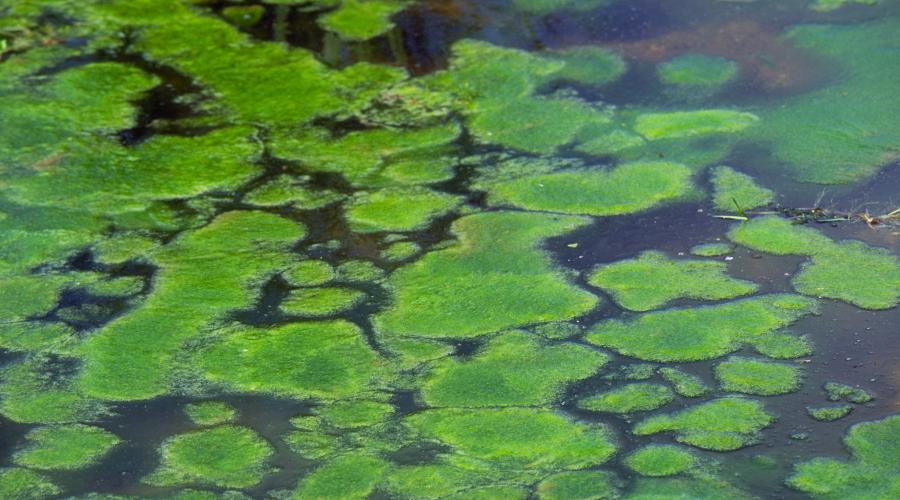
Figure 2. Algae in freshwater
Source: https://www.nature.scot/plants-animals-and-fungi/algae/freshwater-algae
Loss in Biodiversity
Amphibians also help maintain biodiversity, and when there are significant losses in these populations, it may lead to organisms within the ecosystem becoming increasingly similar over time, where loss in biodiversity is an outcome (Zipkin & DiRenzo, 2022). Basically, there would be fewer different species as a result.
Effect: Snakes are greatly affected, with >20% loss in diversity, as their diets depend on amphibians (Zipkin & DiRenzo, 2022). Less available food sources for these predators makes it much more difficult for them to sustain life, which may lead to higher mortality.
Environmental Indicators
In addition, amphibians can be great environmental indicators of stress in freshwater and on land. Disturbances in the environment such as habitat loss, droughts, pollution, diseases, and invasive species can all be detected through amphibians (Stark & Schwarz, 2024). They are known to have permeable skin, which can absorb toxic substances, and when they lay their eggs, their eggs are then directly exposed to pollutants in the environment (Stark & Schwarz, 2024). As such, they are able to show the health of the environment they are inhabiting. Moreover, they are great at indicating the presence of pesticides and diseases.
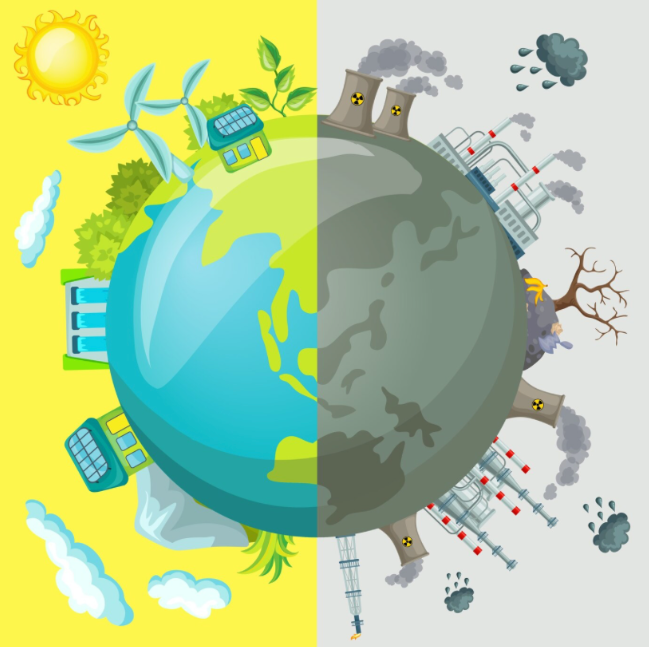
Figure 3. Environmental impact comparison showing healthy vs polluted environments
Source: https://www.freepik.com/free-vector/ecology-cartoon-comparative-illustration-concept_10156183.htm#fromView=keyword&page=1&position=49&uuid=ed10b8e1-0666-4f8d-bac4-84ce2b917df0&query=Earth+Pollution